A Cybersecurity Trend That Might Surprise You
AI is a hot topic in cybersecurity and rightfully so with the ways it can be used to both prevent threats and enable them. In our latest video, Red River Senior Design Architect and cyber expert, Robert Jordan, explains that while AI may be the biggest topic of the year, identity remains the real perimeter. No matter how complex the cyber picture becomes, identity is still a key battleground.
Zero Trust Will Always Be On Trend
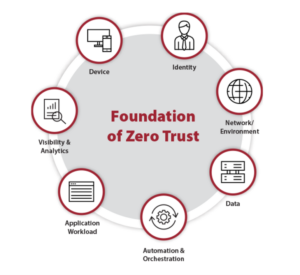
As a foundation for Zero Trust, identity is a primary attack surface for cyber criminals.
Microsoft reports detecting more than 600 million identity attacks every day, making credential theft, session hijacking, phishing and Multi-Factor Authentication (MFA) fatigue the go-to path for breaches. Social engineering, help-desk abuse, stolen sessions, app credentials, domain impersonation and developer credentials are used routinely as tools and identity remains at the center.
Even as MFA improves, attackers are shifting toward the things around authentication: recovery, enrollment, tokens, sessions, service principals, and trusted third-party identities. The primary security challenge has shifted from credential theft to identity-centric authorization theft.
While traditional MFA stops 99.9% of mass, automated credential attacks, cybercriminals have adapted. Instead of trying to guess or break the second factor, they simply bypass it. 59% of successfully compromised corporate accounts had MFA enabled. This highlights a massive shift in the modern threat landscape.
This gets more complex as we look at the evolution of quantum computing which drives the need for Post-Quantum Cryptography (PQC) algorithms to protect against identity breaches. Because attackers are actively capturing encrypted identity data now (“harvest now, decrypt later”), once quantum computing is widely available, these credentials can easily be decrypted leaving organizations exposed.
That’s why organizations have to focus on identity now to provide a strong cybersecurity foundation for the future, not matter how it evolves. Zero Trust is based on a “never trust, always verify” approach to identity, which leverages the following:
- Continuous Verification: Every access request is authenticated, authorized, and validated in real time based on identity, context, and risk.
- Least-Privilege Access: Users and devices are granted only the minimum permissions necessary to complete their specific tasks.
- Assumed Breach: The model operates under the assumption that threats already exist inside or outside the network, using tools like microsegmentation to limit lateral movement.
So, while AI is a worthwhile topic in cybersecurity, without a Zero Trust Architecture (ZTA) rooted in identity management, AI deployments can dramatically amplify an organization’s vulnerability.
Learn more about how our Zero Trust Accelerator can strengthen your organization’s Zero Trust foundation. For more information on how Red River can support your Zero Trust roadmap, contact us.
written by
Ed Levens
As Chief Marketing Officer, Ed Levens oversees Red River’s marketing organization and leads the company’s government relations efforts. He is responsible for strengthening the Red River brand, enhancing market visibility, and expanding the company’s presence across its partner ecosystem. Learn more about Ed on our Leadership Page.