
Identity Management in Cybersecurity: Why It Matters
Researchers discovered treasure troves of login credentials stored in massive datasets that total more than 16 billion, making identity management in cybersecurity a must for companies.
According to reports by Cybernews and Forbes, internet investigators have been tracking billions of usernames and passwords across social media, virtual private networks (VPNs), developer portals and accounts linked to major online vendors since early 2025. The breaking news report, issued on June 18, left multinational corporations reeling because only a fraction of users were aware their data had been compromised.
“This is not just a leak – it’s a blueprint for mass exploitation. With over 16 billion login records exposed, cybercriminals now have unprecedented access to personal credentials that can be used for account takeover, identity theft and highly targeted phishing. What’s especially concerning is the structure and recency of these datasets – these aren’t just old breaches being recycled. This is fresh, weaponizable intelligence at scale,” Cybernews researchers reportedly said.
Adding to the danger, reports indicate that more than just passwords and usernames have been compromised. In some cases, cookies and session tokens have also been stolen. The reason thieves pulled this off may be due to the fact that not every organization resets its cookies following password updates. It’s abundantly clear that infostealers have no intention of abandoning their lucrative criminal endeavors. Fortunately, deploying identity management safeguards can mitigate risk.
What is Identity Management in Cybersecurity?
Identity management protections are typically accompanied by an “access” component. Referred to as Identity Access Management, aka IAM, the approach provides comprehensive data security measures. For the purposes of this discussion, let’s first take a deep dive into the “identity management” facet. It involves the process of confirming the authenticity of user identities within a given business network. The objective is to ensure only legitimate stakeholders use the login credentials.
The cybersecurity measure serves as a type of vetting system, much like a nightclub bouncer checking IDs to ensure patrons are old enough to purchase alcohol and match the photo on their driver’s license. Within the IAM framework, the identity management element helps root out impostors trying to infiltrate the system or take advantage of the credentials in other nefarious ways. These rank among the core components of identity management in cybersecurity.
Identity Lifecycle Management
This aspect of a cybersecurity program can be something of a tweener that overlaps with the access realm as well. Identity lifecycle management involves establishing and deactivating login credentials. When new employees or third parties are given access to the network, user profiles are created, complete with a unique username, password and secondary authentication methods. These profiles are also deactivated once someone leaves the operations. Failing to eliminate profiles creates a vulnerability that can have dire consequences.
As the now-infamous SolarWinds hack demonstrated, leaving login profiles in play indefinitely poses an existential risk to an organization. In a cybersecurity attack that compromised the highest levels of government, an intern reportedly posted their username and password on GitHub four years prior to the incident. Hackers or infostealers appear to have stumbled across it and leveraged it with criminal intent.
Today’s data thieves are well-organized, as evidenced by the explosive revelation of 16 billion user credentials. The point is that proactive identity lifecycle management prevents cybercriminals from taking advantage of orphaned accounts.
Authentication and Verification
User authentication stands among an organization’s frontline defenses. It’s the space where legitimate staff members or hackers make their first attempt at accessing the network and valuable digital assets. A robust cybersecurity posture puts a variety of hurdles in place to ensure that the individual trying to enter the system is authorized.
Entering the confidential username and password is the first step. But these login credentials are so common that people continue to employ weak passwords and repeat them across dozens of platforms. That’s why secondary measures such as the following are mission-critical.
- Two-Factor Authentication: Also known as 2FA, this authentication and verification method tasks people with entering their username, password and then waiting a few seconds for a secondary code. Often a set of numbers, the code is usually delivered via email or text message. The brilliance of 2FA is the fact that hackers would need control of a user’s email or cell phone to learn the code. That proves a bridge too far.
- Multi-Factor Authentication: Routinely referred to as MFA, this security measure adds one or more extra layers to 2FA. A staff member or approved vendor would need to provide two or more unique elements to gain network authorization. They might be as simple as numbers sent via text message, a thumbprint or knowing the answer to a security question. Although MFA may take a moment, it makes exploiting login credentials an insurmountable task.
- Certificate-Based Authentication: This security option sidesteps the need for a username and password. Instead of going the traditional route, a digital certificate is supplied by a trusted resource. It already contains the user’s identity footprint, which is cryptographically secured. Certificate-based authentication provides proof of identity without the risk of usernames and passwords being exposed on a public platform.
- Biometrics: Utilizing an individual’s unique physical characteristics, biometrics offer a robust cybersecurity barrier. Today’s technology gives organizations the ability to authenticate users based on facial recognition, fingerprints, eye scans and voice, among others. Operations that require the most stringent security measures can escalate their defensive posture by integrating multimodal biometric authentication. Leveraging more than one biomarker for cybersecurity purposes offsets a hacker’s ability to deploy deep fakes, photos or audio.
Device authentication also falls under the category of identity management in cybersecurity. Items such as smartphones, tablets, laptops and even desktops in the office, as well as those used by remote workers, are vetted. The purpose of device authentication is to ensure that an authorized network user possesses control of the endpoint and can safely connect to the network and transmit digital information.
Identity Management vs Access Management
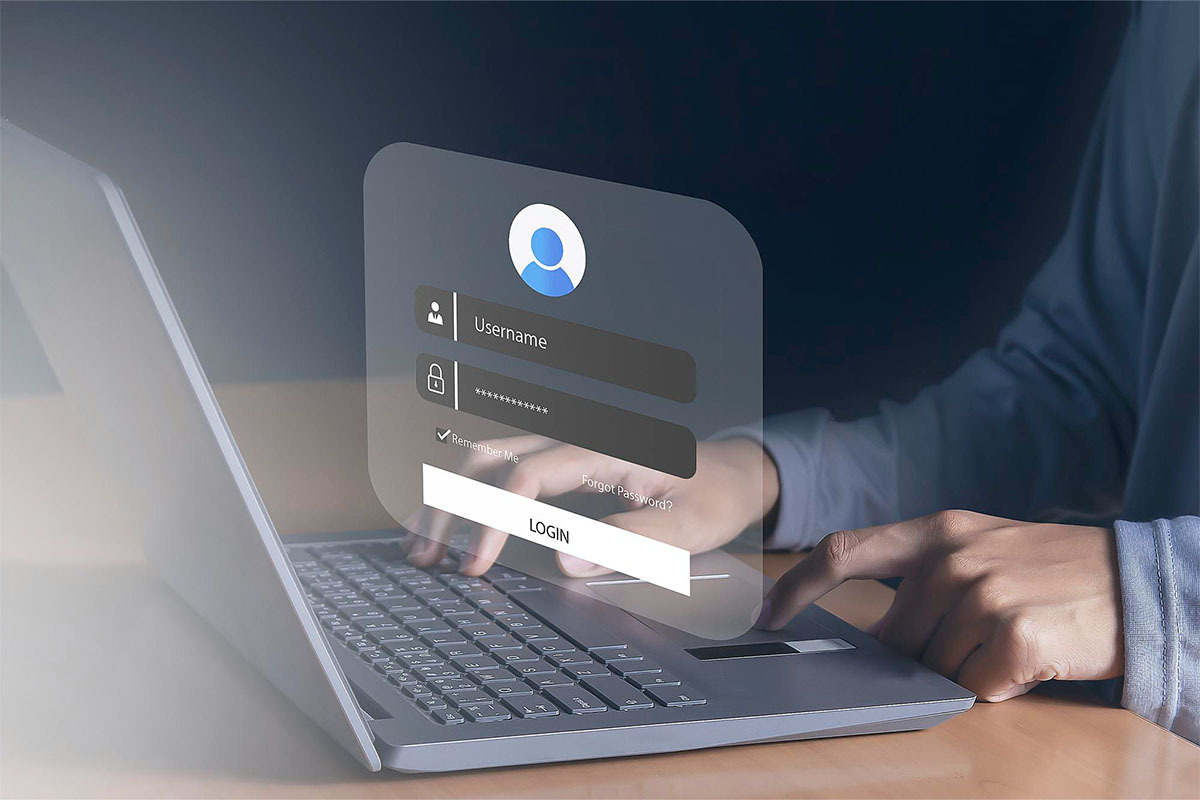
While identity management and its authentication measures confirm the validity of a user and device, access management speaks to the availability of tools and resources. In a zero trust cybersecurity posture, each login profile enjoys only limited access to sensitive data, applications and other assets. Items not required to fulfill ordinary tasks can only be accessed by submitting a request. An authorized supervisor typically approves or denies such submissions.
Rather than bet the house that checking endpoints alone, utilizing multi-factor authentication and other measures will keep hackers at bay. Zero trust is a type of fail-safe measure that assumes threat actors will breach a business network. After all, more than half of businesses sustained a ransomware attack in 2024 and malware incidents topped 6.5 billion last year alone. Keep in mind that Cybernews and Forbes, among others, recently reported that 16 billion pieces of compromised login credential information were hidden in plain sight. Needless to say, restricted user access must be considered a standard cybersecurity practice in today’s dangerous online landscape.
Combining access and identity management in cybersecurity can deliver the determined measures necessary to deter infiltrations and minimize any damage an advanced threat actor may inflict. Simply put, identity management keeps criminals out and access restrictions confine any digital intruder or insider threat. Together, professionals refer to the cybersecurity posture as Identity Access Management, or IAM. When implemented by an experienced cybersecurity firm, IAM proves a tough defense against even the most sophisticated and well-funded threat actors.
Poorly Executed IAM Increases Risk
A poorly executed cybersecurity policy creates unnecessary vulnerabilities. Identity access management is no exception. For an operation to maximize its deter, detect and expel capabilities, network users require ongoing cybersecurity education and training. Strict controls and identity lifecycle management policies must be followed to the letter. These rank among the common impediments to IAM success.
Weak Passwords
It’s true that multi-factor and other authentication methods harden login credential defenses. But weak and reused passwords across multiple accounts give tenacious hackers a head start. Make sure employees and other stakeholders use strong passwords and rotate them on a regular basis.
Credential Theft
The 16 billion login credentials that appear to be compromised demonstrate that infostealers are gaining traction. They often employ phishing schemes and other forms of trickery to dupe otherwise conscientious team members. Cybersecurity awareness training keeps people aware of the wide-ranging online dangers. Educating network users about emails containing malicious links, malware-laced files and scams designed to steal usernames and passwords strengthens a company’s defenses.
Disproportionate Privileges
The access management portion of IAM works best when predetermined limits are placed on each login profile. An assessment of what staff members need to perform goal-achieving endeavors translates into user restrictions on sensitive data, programs and areas of the system.
When people have carte blanche access to digital assets they do not necessarily require, so does a potential hacker. The zero trust model assumes that a cybercriminal has exploited a login vulnerability and breached the system. Minimal access privileges contain the threat and possible losses.
Orphaned Accounts
It’s essential to deactivate accounts when people leave the organization or change their roles. In rare cases, disgruntled former employees pose an insider hazard. Login credentials that remain active, although unused, provide cybercriminals with an opportunity to drill down on the credentials indefinitely. At some juncture, they may find a way to gain access. This begs the question: Why leave a door open and unsecured that could be closed?
The consequences of inadequate identity access management can be shocking, particularly if a login profile enjoys high-level data privileges. The average cost of a data breach in 2024 hovered around $4.9 million. Organizations can also anticipate disciplinary action from government agencies in the form of fines, license suspensions and lost contracts, among other consequences.
Because data breaches tend to negatively impact third parties, the reputational damage associated with being hacked can hamper a business for years. Fortunately, a cybersecurity firm with experience in implementing IAM and zero trust architecture can deliver robust data protection.
Benefits of IAM and Zero Trust
Combining zero trust architecture and IAM delivers comprehensive data protection. Identity management in cybersecurity provides the forward-facing deterrents necessary to prevent unwelcome individuals from misusing user information and vulnerable endpoint devices. Implementing a zero trust program doubles down by restricting permissible access in the unlikely event a hacker manages to force a human error. Together, these rank among the key benefits organizations enjoy by coupling IAM with zero trust.
Risk Management: Phishing remains the primary vehicle used by garden variety hackers. They deploy millions of scam emails designed to entrap staff members every day. The use of multi-factor authentication alone stymies these efforts. By adding endpoint device authentication and data segmentation, hackers find themselves shoveling sand against the tide.
- Credentials Stuffing: The 16 billion pieces of data related to login credentials could easily be sold on the dark web and put to work. Cybercriminals take such information and stuff usernames and passwords into digital accounts. That’s largely because people tend to repeat usernames and passwords. Fortunately, IAM and zero trust minimize risks.
- Decision-Making: The access component empowers business leaders to make critical decisions regarding sensitive and valuable digital assets. Placing standard limits on login profiles significantly reduces insider threat activity. When someone needs to handle data typically outside their normal business-related tasks, supervisors and security professionals can approve or deny such requests.
Adopting IAM with a zero trust cybersecurity posture offers organizations robust data protections mandated by regulatory bodies. The diligent approaches can be seamlessly paired to withstand cyberattacks by sophisticated hackers and newly minted criminal schemes. Simplifying compliance and knowing your critical data enjoys dynamic defenses allows industry leaders to sleep easier at night.
Contact Red River for Identity Management Cybersecurity Solutions
At Red River, we understand the importance of protecting digital assets. We collaborate with companies to deliver effective, scalable managed IT and cybersecurity consulting services. Identity access management, coupled with zero trust architecture, hardens an organization’s attack surface in ways that single cybersecurity approaches cannot. If enhancing your security posture with IAM and zero trust interests you, contact us today by calling or filling out our online form. Let’s get the process started!

written by
Corrin Jones
Corrin Jones is the Director of Digital Demand Generation. With over ten years of experience, she specializes in creating content and executing campaigns to drive growth and revenue. Connect with Corrin on LinkedIn.